Hunting for Ghosts in the Jungle: My Trip to Tangkoko National Park
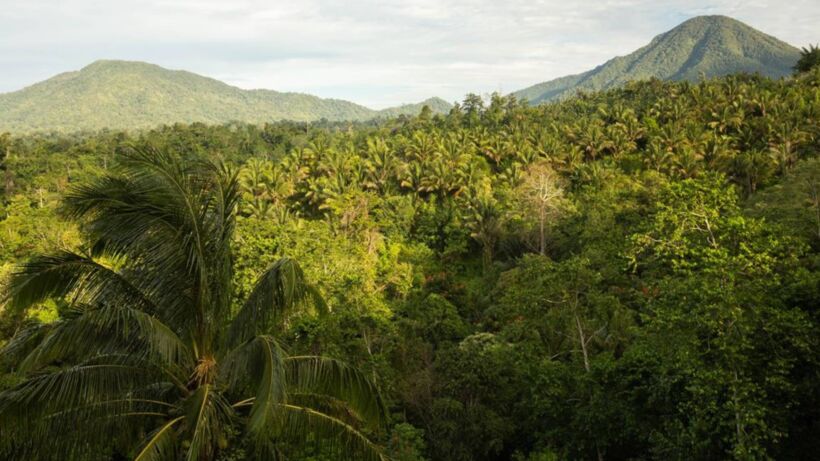
I’m not a morning person. I’m really not. But at 3:30 AM, I was stumbling out of a homestay in North Sulawesi, wiping sleep out of my eyes and trying to lace up my hiking boots in the pitch black. Why? Because I had heard that deep in the jungle of Tangkoko National Park, there are creatures with eyes bigger than their brains that look remarkably like Yoda.
My Trip to Tangkoko National Park
Welcome to Tangkoko. It’s not your polished, ticketed zoo experience. It’s humid, it’s muddy, and it’s absolutely teeming with life. If you want to see animals that act like animals, this is the place.
The 3:30 AM Alarm Clock
The air was already thick with humidity when I stepped outside. It was that sticky, tropical warmth that instantly clings to your skin. We drove for about twenty minutes from the town of Bitung to the park entrance, the headlights cutting through the darkness.
When we arrived, the jungle was just waking up. Actually, that’s a lie. The jungle never sleeps. It was a cacophony of insects, rustling leaves, and the distant, haunting call of a hornbill.
Our guide handed us a flashlight. “Keep low,” he whispered. “Keep quiet.”
Walking into that forest in the dark was disorienting. The ground was a tangle of roots that seemed determined to trip me. I could smell the damp earth and the faint, sour scent of rotting fruit. It felt primal. I felt like prey, to be honest.
Meeting the Spectral Tarsiers
About twenty minutes into the hike, the guide stopped and pointed his flashlight up into the canopy.
There, clinging to a vertical tree trunk, was a Spectral Tarsier.
I held my breath. They are tiny—about the size of a rat—but those eyes. My god, the eyes. They are enormous, fixed forward, and reflect the light like amber glass. They looked like tiny, furry aliens frozen in time.
We watched them for a while. As the sky started to turn that faint purple color of pre-dawn, the tarsiers began to wake up. They didn’t just walk; they launched themselves. One minute they were staring at us, the next they were flying through the air, leaping ten feet to the next trunk.
It was silent movement. No rustling, no warning. Just a blur of fur. Seeing them in the wild, free and untethered, gave me chills. It made every second of lost sleep worth it.
The Black Crested Macaques
By the time the sun was fully up, the tarsiers had gone to sleep in the hollows of trees, and a new cast of characters took the stage.
We ran into a troupe of Black Crested Macaques. These guys are the complete opposite of the tarsiers. They are loud, they are large, and they have a distinct punk-rock hairstyle—a tuft of black hair sticking straight up from their heads.
They were everywhere. They marched down the path right past my legs, ignoring me completely. I watched a mother grooming her baby, picking through his fur with delicate fingers while he squirmed.
Unlike the thieving monkeys you find in Bali or Ubud, these macaques seemed dignified. They were foraging for fruit and insects, going about their morning routine. I sat on a log and just watched them for twenty minutes. It felt like being dropped into a nature documentary, but without the safety of a TV screen.
Other Residents: Hornbills and Bear Cuscus
The jungle here is layered. While the monkeys were on the ground, the birds owned the canopy.
I saw the Sulawesi Hornbill, or “Knobbed Hornbill,” with its massive yellow beak and casque. When they fly, their wings make a distinct wooshing sound, like a helicopter in the distance. It’s a sound that echoes through the valley and really makes you realize how small you are.
We also spotted a Bear Cuscus high up in the trees. It looks like a weird cross between a sloth and a small bear, wrapped in gray fur. It moves incredibly slowly. Our guide pointed it out, and I almost missed it because it was so still, blending perfectly into the bark.
The Trek Itself: Sweat, Mud, and Leech Socks
I want to be real with you about the physical part of this trip. This is not a manicured garden path.
The trail is uneven. There are steep sections, and depending on when you go, it can be incredibly muddy. Within ten minutes, my shirt was soaked through with sweat. The humidity in Tangkoko is relentless because the forest comes right up to the coast.
I was very glad I wore leech socks (or tucked my pants into my socks). We didn’t see many leeches, but the vegetation is thick and you are brushing against vines constantly. The guide will hack away at overgrowth with a machete when the path gets too wild, but be prepared to get dirty.
It was tiring, but the terrain forces you to slow down and look closer. And that’s when you see the cool stuff—tiny colorful crabs in the stream, lizards that look like leaves, and spiders the size of your hand.
Planning Your Visit to Tangkoko
If you are heading to North Sulawesi, you simply have to carve out time for this. It is one of the most rewarding wildlife experiences I’ve had in Indonesia.
The Essential Early Morning Start
You really need to be at the park entrance by 4:00 AM or 5:00 AM.
- Why? The tarsiers are nocturnal. You have a very small window of time—usually right at dawn—to see them active before they go to sleep. If you show up at 9:00 AM, you will miss the main show.
Costs and Guides
You cannot enter the park without a guide. It’s mandatory, and honestly, you’d be lost without them. Their eyes are trained to see what you would definitely walk past.
- Guide Fee: Expect to pay around 100,000 to 150,000 IDR ($7 – $10 USD) per group, depending on how long you hike and your negotiation skills.
- Entrance Fee: The ticket to the park is roughly 100,000 IDR ($7 USD) for foreign tourists.
- Camera Fee: If you are bringing a massive telephoto lens (professional gear), they might charge you an extra fee, but standard cameras and phones are fine.
Getting There
Tangkoko is located in Batu Putih, about a 1.5 to 2-hour drive from Manado, the capital of North Sulawesi.
- Transport: I hired a private car from Manado for the day. It cost around 600,000 – 800,000 IDR ($40 – $55 USD) return. You can also take public transport (a minibus or “mikrolet”) from Paal 2 terminal in Manado to Bitung, and then another “ojek” or motorbike taxi to the park entrance, but that is a long, sweaty ordeal involving multiple transfers. If you can split a car with friends, do it.
What to Bring
- Good shoes: Hiking boots or sneakers with grip.
- Water: You will dehydrate fast.
- Insect repellent: The mosquitos are no joke.
- Rain jacket: Even in the dry season, rain showers happen suddenly in the jungle.
Is Tangkoko worth the long journey to North Sulawesi? Absolutely. Standing there in the mist, watching a Tarsier leap through the trees, I felt further away from civilization than I have in years. It’s raw, it’s wild, and it’s exactly how a jungle adventure should feel.