Tangkahan Elephant Sanctuary: Ethical Jungle Adventure
I’ve heard people call the drive to Tangkahan a “Sumatran Massage.” After spending three hours bouncing around the back of a 4×4, clutching the “oh-sh*t” handle with white knuckles as we navigated crater-sized potholes, I can confirm the nickname is accurate. My back was sore, I was covered in dust, and I had honestly questioned my life choices about twenty times during the ascent.
The Road to Tangkahan: An Adventure with Sumatra’s Elephants
But when we finally crested the hill and the dense jungle canopy parted to reveal the Batang Serangan river winding through the valley, the frustration vanished. Tangkahan feels like the end of the earth. It’s remote, raw, and quiet, save for the roar of the river and the distant call of a gibbon.
I had come here for the elephants. Not to see them in a zoo, and definitely not to ride them. I wanted to meet the residents of the Tangkahan Elephant Sanctuary, a place where retired logging giants are given a second chance at life in the wild.
Meeting the Giants of the Jungle
The next morning, I woke up to the sound of the river rushing past my guesthouse. The air was already thick with humidity, sticking my t-shirt to my skin before I even had breakfast. We walked down to the riverbank to meet the mahouts (elephant caretakers).
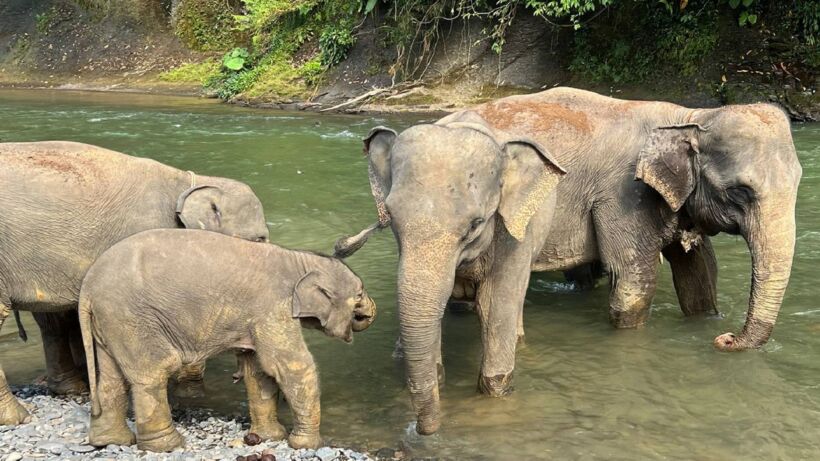
There were six of them. These are Sumatran Elephants, a critically endangered species, and seeing them up close is humbling. They are smaller than their African cousins, but still massive. Their skin is rough and wrinkled, covered in sparse, bristly hair that feels like a hard scrub brush when you touch it.
Bathing with Elephants, Not Riding Them
The experience here is different from the tourist traps in Thailand or southern Bali. You don’t sit on a chair strapped to their back. You get in the water with them.
We waded into the cool river—the current was surprisingly strong—and stood waist-deep near the bank. The mahouts gave the signal, and the elephants sauntered in. It was incredible to watch them submerge themselves, using their trunks like snorkels to breathe while they rolled on the riverbed.
My job was simple: scrub.
I took a coarse brush and started scrubbing a large female’s back. She leaned into the pressure, clearly enjoying the exfoliation. There’s something incredibly grounding about touching an animal that gentle yet powerful. She would occasionally turn her head and spray me with water from her trunk, which the mahouts found hilarious. I just tried to keep my balance on the slippery rocks.
It felt like a symbiotic relationship. The elephants get a spa day and relief from the heat, and we get the privilege of their company. There was no bullhook, no shouting, just respect.
Beyond the Elephants: Tubing and Waterfalls
After the morning elephant session, I was ready to cool off properly. We grabbed large rubber inner tubes and floated down the river.
This isn’t a lazy, man-made lazy river. It’s the real deal. The jungle banks towered over us, filtering the sunlight into a soft green glow. We drifted past massive rocks and over small rapids, screaming a little when the water splashed over our faces. It was the perfect way to see the landscape from a different angle.
Later that afternoon, we hiked to a nearby waterfall. The trail was slick with mud and lined with giant ferns that made me feel like I had shrunk down to the size of a bug. The waterfall itself wasn’t the biggest I’ve ever seen, but the pool at the bottom was ice-cold and refreshing. We had it entirely to ourselves, which is a rarity in popular tourist destinations these days.
The Reality Check: Is It Ethical?
I want to be honest here. I struggle with animal tourism. I’ve seen too many places that exploit animals under the guise of “conservation.”
Tangkahan isn’t perfect. The elephants are chained at night to prevent them from wandering into the village and raiding crops (human-elephant conflict is a real issue here). Seeing the chains in the evening was a heavy, sobering moment.
However, the CRU (Conservation Response Unit) here does vital work. These elephants were formerly used for illegal logging. If they weren’t in this program, they likely would have been poached or died of starvation. The money paid for the washing experience and the trekking goes directly to paying the mahouts and funding the patrol units that protect the park from illegal loggers and poachers.
It’s a complex situation, but standing waist-deep in the water, scrubbing the back of an animal that was once forced to destroy the very forest it now lives in, it felt like the lesser of two evils. It felt like redemption.
Planning Your Trip to Tangkahan
This is not a day trip from Medan. It takes effort to get here, and it’s not cheap. But if you want to support ethical tourism in Sumatra, this is the place to do it.
How to Get There (and Survive the Drive)
The most common route is via Bukit Lawang.
- From Bukit Lawang: It takes about 2–3 hours by car. The road is… adventurous. You cannot do this easily on a motorbike unless you are an experienced off-road rider. I highly recommend hiring a driver with a sturdy 4×4.
- From Medan: It’s a 4–5 hour drive. Prepare for traffic leaving the city and terrible roads once you get close.
Costs and Budgeting
Tangkahan is more expensive than the rest of Sumatra, mostly because the logistics are hard.
- Elephant Washing: You don’t pay per ticket; you pay for the “package” which includes the guide, the mahout fees, and the conservation fee. Expect to pay around IDR 600,000 to 750,000 ($40 – $50 USD) per person for the washing experience.
- Jungle Trekking: If you want to trek with the elephants (they patrol the forest), it’s pricier, around IDR 1,200,000 ($80 USD).
- Accommodation: It’s basic. Think bamboo huts, fans (no AC), and cold showers. You’ll pay between IDR 200,000 – 400,000 ($13 – $27 USD) a night for a decent room. The sound of the river is the AC here.
What to Bring
- Water shoes: The river is rocky and slippery.
- Bug spray: The jungle mosquitoes are relentless at dawn and dusk.
- Cash: There are no ATMs in Tangkahan. Bring enough Rupiah for your entire stay.
Is the bumpy drive worth it? absolutely. Standing in that river, watching an elephant flap its ears in the cool water, I felt a connection to nature that you just don’t get in the city. It’s raw, it’s real, and it’s an adventure I won’t forget.