Tanjung Puting: The only orangutan guide you’ll ever need
I’ll be honest: the flight to Pangkalan Bun wasn’t exactly comfortable. It’s a long way to go just to look at monkeys, right? That’s what I kept telling myself as we bounced through the clouds above Kalimantan. I was tired, the air conditioning in the tiny terminal was broken, and the humidity hit me like a wet blanket the second I stepped off the plane.
Why I Went Deep Into the Borneo Jungle to See Orangutans
But within an hour of climbing into a wooden boat called a klotok, I realized I had been completely wrong. This wasn’t just a sightseeing trip. It felt like we had drifted off the edge of the map.
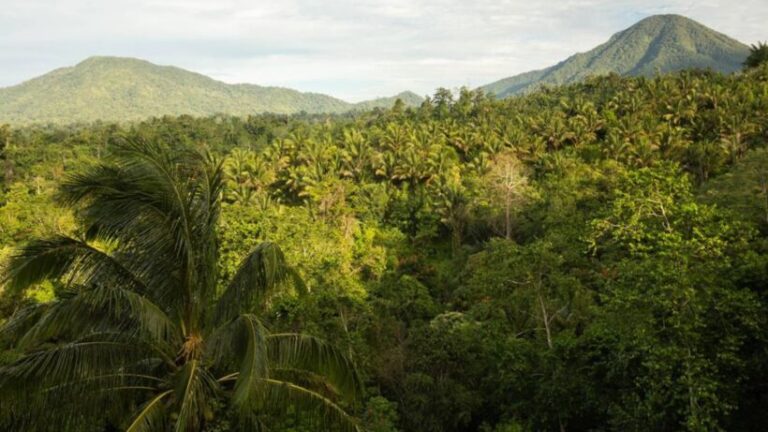
If you are thinking about visiting Tanjung Puting National Park, stop thinking about the logistics for a second and imagine this: You are lying on a mattress on the top deck of a riverboat. The jungle is so loud it’s almost deafening—crickets, birds, and the distant whoop of a gibbon. The air smells of damp earth and diesel fuel. And you are watching a wild orangutan crash through the trees directly above your head.
That is the reality of Tanjung Puting. It’s messy, sweaty, and absolutely incredible.
My Home on the Water: Life on a Klotok
Everything in Tanjung Puting revolves around the river. You can’t just drive to a lodge. You have to live on the river. The boats here, called klotoks, are essentially rustic houseboats. They have a bottom deck for the crew and dining, and an upper deck with a roof and mattresses where you sleep.
I was worried about the sleeping situation before I arrived. I’m not exactly a “camping” kind of guy. But it ended up being one of the coolest parts of the trip.
Sleeping Under the Stars (With Mosquito Nets)
We didn’t have cabins. We just had mattresses laid out on the deck, covered in mosquito nets. It sounds primitive, but waking up to the sunrise over the misty Sekonyer River is something I’ll never get tired of.
Pro tip: Bring a sleep mask. The crew starts moving around pretty early, and the sun is bright by 5:30 AM. Also, the “shower” is a bucket and a ladle on the back of the boat. It’s basically river water pumped into a tank. You splash it over yourself to cool down. It’s shocking at first, but when it’s 95 degrees out with 90% humidity, that cold bucket shower feels like heaven.
The Food Situation
I was expecting canned beans and stale bread, but I was pleasantly surprised. Our cook worked magic on a single gas burner. We ate fresh grilled fish (caught that morning), spicy tofu, vegetables, and endless amounts of pineapple and watermelon.
One night, they made Gudeg, a young jackfruit stew that is a specialty of the region. It was sweet, savory, and spicy. We ate it on the deck by lantern light while the boat drifted silently in the dark.
The Main Event: Meeting the Orangutans
There are three main feeding stations in the park: Tanjung Harapan, Pondok Tanggui, and the famous Camp Leakey. The rangers put out bananas and milk at specific times to supplement the diets of the wild and semi-wild orangutans.
It’s important to manage your expectations. You aren’t going to a zoo. The animals are not in cages. If they don’t want to show up, they don’t show up.
Camp Leakey: The Heavy Hitters
Camp Leakey is the research station founded by Biruté Galdikas. It’s deep inside the park, and it takes a few hours to get there by boat.
When we pulled up to the dock, the air was thick with the smell of rotting fruit and wet vegetation. We hiked down a muddy boardwalk, slipping and sliding in our boots. About twenty minutes in, the jungle went quiet. Then, branches started snapping overhead.
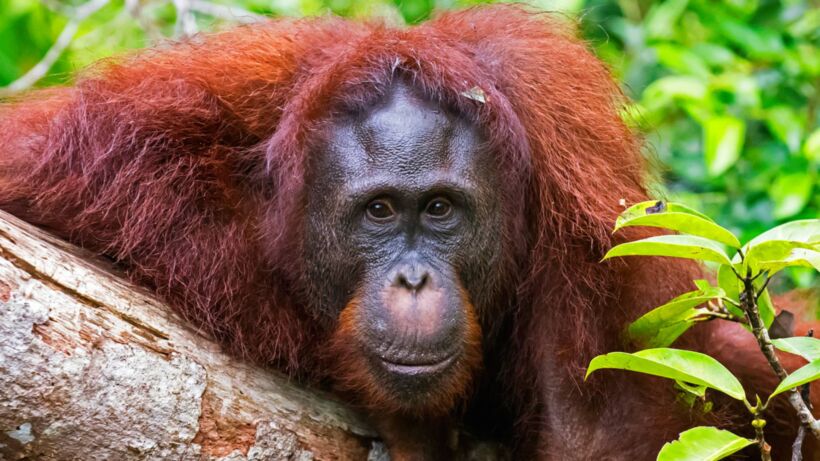
An enormous male orangutan named Tom came crashing down. He was huge—easily 200 pounds of pure muscle with massive cheek pads. He sat on the platform, completely ignoring the tourists staring at him, and methodically peeled a bunch of bananas.
I felt a mix of awe and terror. Tom was so close I could see the individual hairs on his arms. A ranger gently guided us back a bit when Tom decided he wanted to walk down the boardwalk. You don’t argue with a creature that strong.
The Mothers and Babies
At Pondok Tanggui earlier that day, the vibe was different. We saw more females and babies. Seeing a mother orangutan cradling an infant, looking at it with the same tenderness a human mother would, was surprisingly emotional. It hits you how similar we are.
Just be warned: the macaques (the monkeys with the long tails) are everywhere at the feeding stations. They are aggressive thieves. One of them tried to snatch a water bottle right out of my hand. Keep your stuff zipped up.
Nights on the River
The sun sets fast in the jungle. One minute it’s daylight, the next it’s pitch black. This is when the river changes personality.
The crew killed the engine near a bank of Nipa palms and we drifted in silence. Then, we saw them. Fireflies. Not just a few, but thousands. They looked like Christmas lights flickering in the trees. It was one of the most peaceful moments of my life.
However, the nights aren’t all magic. The humidity is intense. It never really cools down. I woke up a few times just to pour a bottle of water over my head because I was sticking to the mattress. And the insects? The jungle bugs are loud. It sounds like a high-voltage electric buzzing noise all night long. I’d recommend bringing good earplugs if you are a light sleeper.
Planning Your Trip to Tanjung Puting
If I’ve convinced you to go (and I really think you should), here is the practical stuff you need to know. It’s not the easiest place to get to, but that’s part of its charm.
Getting There
You have to fly into Pangkalan Bun (PKN).
- From Jakarta: Garuda Indonesia and Trigana Air usually fly this route. It takes about 1.5 hours. Try to book the earliest flight so you maximize your time on the boat.
- From Bali: You’ll have a layover in Jakarta or Surabaya.
Once you land, it’s a 20-minute taxi or minibus ride to the port town of Kumai, where you’ll meet your boat.
How Much Does It Cost?
This isn’t a budget backpacker destination, but it’s not luxury resort pricing either. The biggest cost is the boat.
- The Klotok: You rent the whole boat. Prices vary, but expect to pay between IDR 3,000,000 to 4,500,000 ($200 – $300 USD) per day.
- Splitting the Bill: This is where it gets better. If you are a group of 4 or 5, you can split this cost. For a 3-day/2-night trip, I paid roughly $250 total, which included the boat, all food, a captain, a cook, and a guide.
- Park Fees: You have to pay for a permit and camera fees. It’s roughly IDR 150,000 ($10 USD) per day for the permit.
- Tips: Don’t stiff the crew. They work incredibly hard. We tipped about IDR 100,000 ($7 USD) per person per day.
Best Time to Visit
I went in July, which is technically the dry season.
- Dry Season (June – September): The river is lower, so the banks are muddy (making it easier for the rangers to spot crocodiles, actually), and it rains less.
- Wet Season (October – May): It rains. A lot. The river rises high, which means you can often see more wildlife from the boat level, but you will get wet. Bring a good poncho.
How Long Should You Stay?
Most people do a 3 Day / 2 Night trip. This gets you to Camp Leakey and back. I felt this was the perfect amount of time. If you have more time and budget, 4 days allows you to go deeper into the black water lakes, which are even more remote and quiet.
The Verdict: Is It Worth It?
Let’s be real for a second. It’s hot. You will sweat through your clothes twice a day. You might see a cockroach the size of your hand in the bathroom. The boat engine is loud.
But would I do it again? In a heartbeat.
There is something profound about seeing these Great Apes in their natural home, not behind glass. The feeling of isolation on the river is rare in our hyper-connected world. If you want an adventure that feels gritty and real rather than polished and packaged, Tanjung Puting is the place. Just pack extra deodorant.