Alas Kedaton: Enchanting Wildlife Sanctuary Experience
I’ll admit, I was skeptical.
After spending a few weeks in Bali, I’ve seen my fair share of “monkey forests.” Usually, that means a gaggle of tourists, aggressive animals stealing sunglasses, and a slightly overpriced ticket. But I was driving through Tabanan Regency, on my way back from the coast, and I saw the sign for Alas Kedaton. I figured, why not?
Battling Macaques and Befriending Bats: My Afternoon at Alas Kedaton
What I found wasn’t just another tourist trap. It was weird, slightly chaotic, and surprisingly atmospheric. It’s definitely not the polished wildlife park you might expect, but that’s kind of what I liked about it.
First Impressions: The Heat and the Guides
The first thing you notice when you arrive is the heat. It hits you like a wall as you step off the scooter. The air is thick and humid, smelling of damp earth, incense, and the faint, musky scent of wild animals.
I parked my bike in the dusty lot and made my way toward the entrance. Immediately, I was approached by a local guide. In Bali, this is pretty standard. Sometimes it’s annoying, but at Alas Kedaton, I actually recommend getting one. The forest is dense, and without someone to point things out, you might miss half of what’s going on up in the canopy.
I struck a deal for a guide—nothing official, just a shared understanding that I’d tip him at the end if he did a good job.
Walking Under the Canopy
Unlike the Sacred Monkey Forest in Ubud, where you’re walking on paved paths through deep ravines, Alas Kedaton feels different.
The trees here are massive, but their branches start high up, creating a natural roof. I spent the entire walk looking up. Sunlight filters through the leaves in dappled patches, lighting up the moss growing on the massive roots that snake across the ground.
The ground itself is carpeted in dry leaves, which crunch satisfyingly underfoot as you walk. It feels quieter here, more secluded, shielded from the noise of the traffic outside the gates.
The Macaques: Feisty and Fierce
Let’s talk about the monkeys.
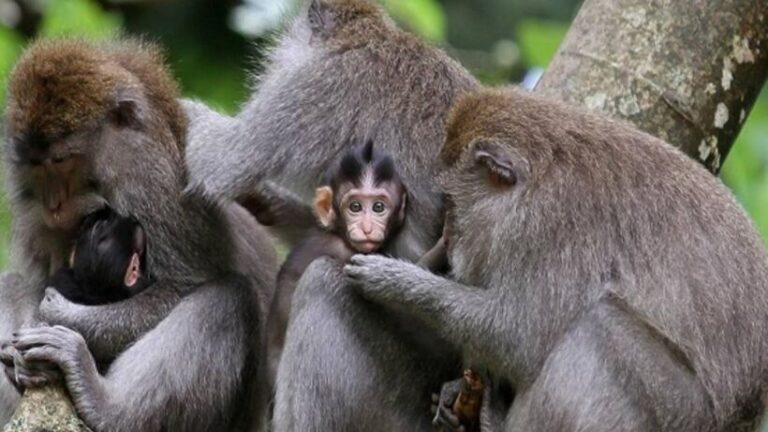
They are Long-tailed Macaques, and they run this place. I’m used to monkeys in Ubud that are generally indifferent to humans unless you have food. The ones here seemed a bit more… intense.
I was instructed by my guide to tuck my sunglasses into my shirt and remove my earrings. “They like the shiny things,” he warned with a grin.
At one point, a large male monkey jumped down onto the railing next to me. He stared me down, baring his teeth slightly. It wasn’t aggressive, just a power move. I slowly backed away, heart hammering a little. It’s a good reminder that these are wild animals, not pets in costumes.
If you have kids with you, keep them close. The monkeys here are fast, and they are opportunists.
The Real Stars: The Flying Foxes
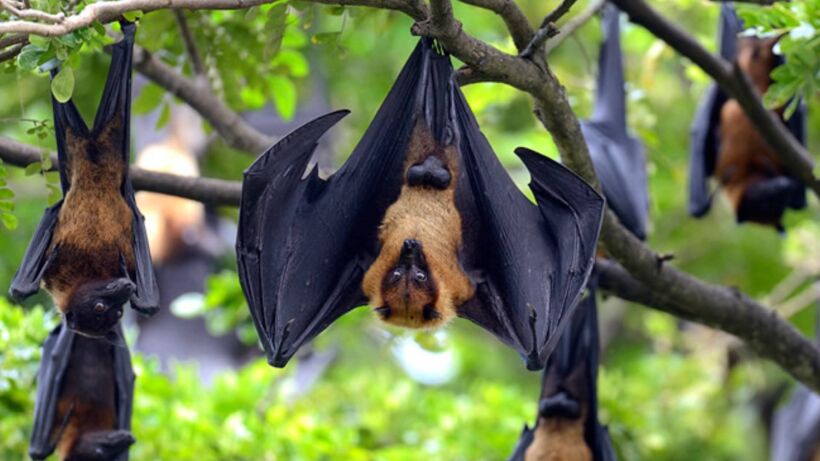
This was the surprise. I knew there were monkeys, but I hadn’t realized Alas Kedaton is also a sanctuary for giant fruit bats, known locally as Kalong.
Walking deeper into the forest, the smell changed—sharper, a bit more like a barnyard. I looked up into the high branches and saw them. Dozens of them.
They are enormous. Their wingspans are easily four or five feet across. During the day, they hang upside down, wrapping their leather-like wings around their bodies like dark cloaks.
It felt a little eerie, watching these massive creatures sway gently in the breeze, occasionally stretching a wing or letting out a high-pitched chirp. My guide told me that at sunset, the sky goes black as they all leave the forest to find food. Sadly, I missed that, but just seeing them asleep in the trees was worth the price of admission alone. It’s not something you see every day.
The Temple Behind the Fence
In the middle of the forest stands Pura Dalem Alas Kedaton, a holy temple dedicated to the god of Shiva and the goddess Durga.
You can’t go inside—the inner sanctum is for worshippers only—but you can view it from the perimeter. The architecture is stunning, featuring ancient moss-covered stones and intricate carvings that have been softened by centuries of tropical weather.
There’s a distinct spiritual vibe here, despite the monkeys playing tag on the roof. I saw a few locals making offerings, placing woven palm baskets filled with flowers and rice on the ground. The smoke from the incense coils drifted through the trees, mixing with the cool forest air. It was a moment of peace in the middle of the jungle.
Is It Worth the Detour?
Honestly? It depends on what you like.
If you are looking for a pristine, educational zoo experience, you might be disappointed. The facilities are basic, and the monkeys can be a bit much if you’re nervous around animals.
But if you want to see something a bit different—a lush forest that feels wild, massive bats hanging in the trees, and a temple that feels genuinely ancient—then yes, go.
It’s also much cheaper and less crowded than Ubud. I spent about an hour here, slowly wandering, snapping photos, and just breathing in the jungle air. It felt like a palate cleanser after the busy beaches in the south.
The Souvenir Gauntlet
I do have to warn you about the exit. You have to walk through a long corridor of souvenir stalls to get out.
The vendors are persistent. “Good price for you, mister!” “Special price, I look at you and I see a good man!”
It can be overwhelming if you’re not used to the bargaining culture in Bali. My advice? Smile, keep walking, or be ready to haggle hard. I bought a cold bottle of water from a lady who looked like she’d been sitting there all day, just to escape the heat, and paid a bit more than I should have, but honestly, I didn’t mind.
Practical Tips for Visiting Alas Kedaton
If you plan to add this to your Bali itinerary, here are a few things I wish I’d known beforehand.
Location and Getting There
Alas Kedaton is located in the Kukuh village in the Marga district of Tabanan Regency. It’s about a 30 to 40-minute drive north of Seminyak or Canggu.
I rode my scooter there. The roads are in decent condition, mostly scenic routes through rice paddies. If you don’t drive, hiring a private driver is easy enough. Just be aware that parking can be a bit chaotic on busy days.
Entrance Fees and Costs
The ticket price is very reasonable. When I went, it was around 20,000 IDR for adults and 15,000 IDR for kids (roughly $1.50 USD).
If you take a guide—and I suggest you do—bring some small cash for a tip. 50,000 to 100,000 IDR is standard depending on how helpful they are.
Opening Hours
This is important. The sanctuary is usually open daily from 8:30 AM to 6:00 PM.
I’d recommend aiming for the afternoon, around 3:00 or 4:00 PM. The temperature drops slightly, and the forest feels more alive as the animals start moving around before sunset. Plus, if you time it right, you might see the bats waking up.
What to Bring
- No Food or Plastic Bags: The monkeys will smell it a mile away. Keep your snacks in the car.
- Sunglasses with a Strap: Or just leave them in your bag. Loose glasses are monkey magnets.
- Modest Clothing: Since there is a temple on site, wear a shirt that covers your shoulders and shorts or a skirt that goes past the knees. Sarongs are usually available to rent if you forget.
Final Thoughts
Alas Kedaton isn’t going to be the highlight of your Bali trip, and that’s okay. It’s a quirky, low-key stop that offers a glimpse of the island’s wilder side.
I left with dirt on my shoes, a slightly frantic story about a monkey stealing a water bottle from someone else, and a new appreciation for giant bats. Sometimes, the weird days are the best ones.