How Japan Is Changing the Game with Visa: 4 New Travel Rules to Know for 2026
[ad_1]
How Japan Is Changing the Game with Visa: 4 New Travel Rules to Know for 2026

Japan has always felt like a second home for many travelers. Between the neon-soaked streets of Shinjuku, the quiet temples of Kyoto, and the unparalleled efficiency of the Shinkansen, it is a country that balances futurism with tradition unlike anywhere else on earth. However, if you are dusting off your passport for a 2026 getaway, the landscape is shifting.
While the “Land of the Rising Sun” remains as welcoming as ever, the Japanese government is introducing several significant policy changes. These updates aren’t just bureaucratic red tape; they are strategic moves designed to combat overtourism and preserve the very cultural heritage we all fly thousands of miles to see. With a bold goal of attracting 60 million international visitors by 2030, Japan is tightening its belt on logistics.
Before you book that flight or reserve your room at the Ritz-Carlton Kyoto, here are the four major rule changes you need to factor into your travel budget and itinerary.
1. The Visa Fee Leap: Budget for a Quintuple Increase
If you’ve been traveling to Japan for years, you’ve likely enjoyed the relatively low cost of entry. That is about to change in a big way. For the first time since 1978, Japan is significantly hiking its visa application fees.
Starting as early as April 2026, the cost for a single-entry visa is expected to jump from the long-standing ¥3,000 to a much steeper ¥15,000. If you are a frequent flyer opting for a multiple-entry visa, expect to shell out around ¥30,000.
Why the sudden spike? The Japanese government aims to align its administrative costs with other global powerhouses like the United States and the European Union. While it might sting the wallet initially, the revenue is intended to streamline the visa application process and enhance border security. If you’re planning a spring trip for the cherry blossoms, make sure your “miscellaneous” budget category has a bit more cushion this year.
2. Shopping Reform: The New Tax-Free Refund System
For many of us, a trip to Japan isn’t complete without a midnight run to Don Quixote or a luxury spree at the Gotemba Premium Outlets. Japan’s tax-free shopping has always been a major draw, allowing tourists to bypass the 10% consumption tax right at the cash register.
However, effective November 1, 2026, the “discount at the counter” era is ending. Japan is moving to a refund-based system to align with international standards and prevent the illegal domestic resale of tax-free goods.
Under the new rules:
- You will pay the full retail price (including tax) at the point of sale.
- You must keep your receipts and present your goods at self-service kiosks or dedicated counters at the airport before you depart.
- The tax will then be refunded to you, likely via your credit card or digital wallet.
The minimum spend of ¥5,000 remains the same, but you’ll need to arrive at the airport a little earlier than usual to process your claims. It’s a bit more paperwork, but it ensures the system remains sustainable for the millions of shoppers visiting each year.
3. Leaving Will Cost More: The Departure Tax Hike
It’s the fee nobody likes to talk about because it signals the end of the vacation. Since 2019, Japan has collected a modest “Sayonara Tax” of ¥1,000 from travelers leaving the country. Starting July 1, 2026, that departure tax will triple to ¥3,000 per person.
This fee is typically baked into the price of your airline or ferry ticket, so you might not see it as a separate line item, but it definitely impacts the total cost of your trip. The government expects this to generate significant revenue—upwards of ¥150 billion—which will be funneled directly into improving tourism infrastructure. This includes everything from multilingual signage and faster airport Wi-Fi to better crowd management in high-traffic areas like Tokyo Haneda and Narita. Essentially, your departure tax is an investment in making your next trip to Japan even smoother.
4. Kyoto’s New Tiered Accommodation Tax
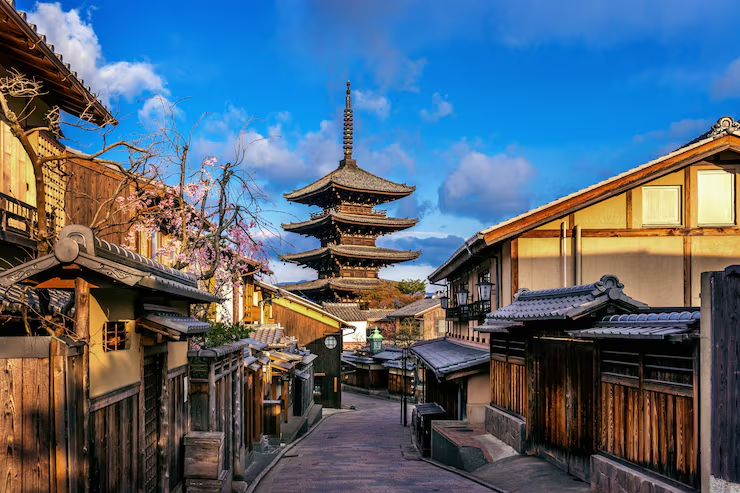
Kyoto is a victim of its own beauty. The historic city has struggled with “tourist pollution” for years, leading local authorities to implement more aggressive measures to protect its soul. Starting March 1, 2026, the Kyoto Prefectural Government is rolling out a sophisticated tiered accommodation tax.
Previously, the tax mostly targeted mid-to-high-range hotels. The new system now covers almost every stay, including budget-friendly lodgings under ¥6,000 per night. For those staying in ultra-luxury ryokans or suites exceeding ¥100,000 a night, the tax can reach as high as ¥10,000 per night.
The breakdown looks like this:
- Budget stays (<¥6,000): ¥200 per night.
- Mid-range (¥20,000 – ¥50,000): ¥1,000 per night.
- Luxury (>¥100,000): ¥10,000 per night.
While it might seem like a lot for a week-long stay, these funds are critical for maintaining the ancient temples, cleaning the streets of Gion, and ensuring that Kyoto remains a living city rather than just a museum for tourists.
Making the Most of Your 2026 Trip
Japan is evolving. These changes—while requiring a bit more financial planning—are part of a broader effort to ensure that the country remains the world-class destination we love. By being aware of the visa fee hike, the new tax refund kiosks, and the accommodation taxes, you can avoid any “sticker shock” upon arrival.
Whether you’re there for the street food in Osaka, the skiing in Hokkaido, or the fashion in Ginza, a little preparation goes a long way. Japan is ready for you in 2026; just make sure your wallet and your itinerary are ready for Japan.
The post How Japan Is Changing the Game with Visa: 4 New Travel Rules to Know for 2026 appeared first on Travel And Tour World.
[ad_2]
Read the full article on Source link