Sangeh Monkey Forest: Incredible Bali Adventure
Discover the enchanting Sangeh Monkey Forest, a hidden gem near Ubud where hundreds of long-tailed macaques roam freely among ancient temples and towering nutmeg trees. This sacred sanctuary offers a unique glimpse into Bali’s spiritual connection with nature.
- Sangeh Monkey Forest
- The History and Cultural Significance of Sangeh Monkey Forest
- The Monkeys of Sangeh
- Visiting Sangeh Monkey Forest
- Safety Tips for Your Visit
- How to Get to Sangeh Monkey Forest
- Comparing Sangeh to Other Monkey Forests in Bali
- The Best Time to Visit Sangeh Monkey Forest
- Photography Tips for Sangeh Monkey Forest
- Conservation Efforts at Sangeh Monkey Forest
- Nearby Attractions to Combine with Your Visit
- Supporting the Local Community
- Are you ready?
- Summary
Sangeh Monkey Forest
Sangeh Monkey Forest offers a unique wildlife experience in the heart of Bali. This sacred sanctuary, located just a short drive from Ubud, provides visitors with the opportunity to observe hundreds of long-tailed macaques in their natural habitat while exploring ancient temple grounds nestled within a pristine forest environment.
Spanning approximately 14 hectares, Sangeh Monkey Forest is distinguished by its towering nutmeg trees (Dipterocarpus hasseltii) that create a lush canopy overhead. These remarkable trees, some reaching heights of 40 meters, are believed to be centuries old and form a unique ecosystem that supports not only the monkey population but also numerous bird species and other wildlife.
The History and Cultural Significance of Sangeh Monkey Forest
The history of Sangeh Monkey Forest is deeply intertwined with Balinese culture and spirituality. According to local legend, the forest and its nutmeg trees originated from the Hindu epic Ramayana. The story tells of Hanuman, the monkey god, who moved a forest to Bali to help Prince Rama rescue his wife Sita.
Within the forest stands Pura Bukit Sari, a temple built in the 17th century by the Mengwi Kingdom. This temple adds a spiritual dimension to the forest, making it not just a wildlife sanctuary but also a place of worship and cultural importance. The coexistence of the temple and the monkeys represents the Balinese Hindu philosophy of harmony between humans, nature, and the spiritual world.
Dr. I Made Suarta, a professor of Balinese cultural studies at Udayana University, notes that “Sangeh Monkey Forest exemplifies the Balinese concept of Tri Hita Karana – the three causes of well-being through harmonious relationships between humans, nature, and the divine” (Suarta, 2021).
The Monkeys of Sangeh
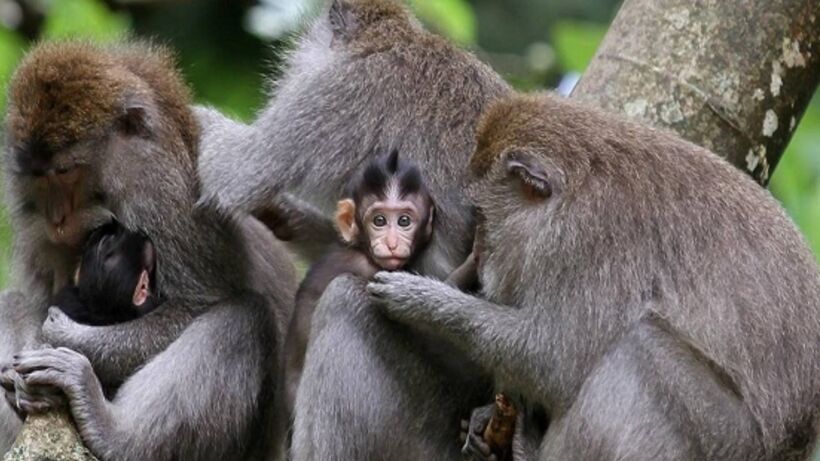
The primary inhabitants of Sangeh Monkey Forest are long-tailed macaques (Macaca fascicularis). These intelligent and adaptable primates are native to Southeast Asia and have thrived in the protected environment of the forest. The current population is estimated to be between 600-700 individuals, divided into several social groups with distinct hierarchies.
The monkeys of Sangeh are known for their distinctive appearance, with grayish-brown fur and characteristically long tails. Unlike monkeys in some other tourist areas, those in Sangeh are generally well-behaved due to the careful management by the forest staff and the sacred nature of the site.
According to a study by the Bali Wildlife Conservation Institute (2020), the Sangeh monkey population has remained stable over the past decade, indicating successful conservation efforts and sustainable tourism practices.
Visiting Sangeh Monkey Forest
A visit to Sangeh Monkey Forest offers more than just monkey watching. The experience encompasses cultural exploration, nature appreciation, and wildlife observation. Here’s what to expect during your visit:
- Well-maintained pathways that wind through the forest
- Several ancient temples and shrines to explore
- Information boards detailing the forest’s history and ecosystem
- Designated feeding areas where you can observe the monkeys
- Local guides available for hire to enhance your experience
The forest is open daily from 7:30 AM to 5:30 PM, with the entrance fee currently set at approximately 50,000 IDR for foreign visitors. This fee contributes to the conservation efforts and maintenance of the sanctuary.
Safety Tips for Your Visit
While the monkeys in Sangeh are generally accustomed to human presence, it’s important to follow certain guidelines to ensure a safe and enjoyable visit:
- Secure all belongings, especially sunglasses, hats, cameras, and phones, as monkeys may grab them
- Avoid direct eye contact with the monkeys, as they may interpret this as a challenge
- Do not feed the monkeys outside of designated areas with provided food
- Keep a respectful distance and do not attempt to touch the monkeys
- Wear appropriate clothing that covers shoulders and knees out of respect for the temple areas
- Follow all instructions from forest staff and local guides
How to Get to Sangeh Monkey Forest
Sangeh Monkey Forest is conveniently located in the Badung Regency of Bali, making it accessible from various parts of the island. Here are the best ways to reach this natural sanctuary:
- From Ubud: Approximately 45 minutes by car or scooter (18 km)
- From Denpasar: About 1 hour by car or scooter (25 km)
- From Seminyak/Kuta: Roughly 1.5 hours by car or scooter (35 km)
- From Canggu: Around 1 hour and 45 minutes by car or scooter (40 km)
Many visitors choose to hire a private driver for the day, which allows them to combine Sangeh Monkey Forest with other nearby attractions such as Taman Ayun Temple or the Alas Kedaton Monkey Forest.
Comparing Sangeh to Other Monkey Forests in Bali
Bali is home to several monkey forests, each with its own unique characteristics. Sangeh stands out for several reasons:
- Natural forest setting with ancient nutmeg trees, unlike the more manicured Ubud Monkey Forest
- Fewer crowds compared to the popular Ubud Monkey Forest
- The presence of a significant temple within the monkey habitat
- More controlled environment with less aggressive monkey behavior
- Lower entrance fees compared to some other monkey forests
While the Ubud Monkey Forest may be more famous among international tourists, Sangeh offers a more authentic and less commercialized experience, making it a favorite among those seeking a deeper connection with Balinese nature and culture.
The Best Time to Visit Sangeh Monkey Forest
Timing your visit can significantly enhance your experience at Sangeh Monkey Forest. Consider these factors when planning your trip:
- Early morning visits (7:30-9:00 AM) offer cooler temperatures and more active monkeys
- Late afternoon (3:00-5:00 PM) provides beautiful lighting for photography
- Weekdays tend to be less crowded than weekends
- The dry season (April-October) offers more predictable weather conditions
- Avoid major Balinese holidays if you prefer fewer crowds
Photography Tips for Sangeh Monkey Forest
Sangeh Monkey Forest presents excellent opportunities for wildlife and nature photography. To capture the best images:
- Use a fast shutter speed to freeze the monkeys’ quick movements
- A zoom lens (70-200mm) allows you to maintain distance while getting close-up shots
- The diffused light under the forest canopy is ideal for portraits
- Focus on capturing the monkeys’ interactions with each other and their environment
- Include the towering nutmeg trees to show the scale of the forest
- Be respectful and avoid using flash, which can disturb the animals
Conservation Efforts at Sangeh Monkey Forest
The management of Sangeh Monkey Forest is committed to conservation and sustainable tourism practices. These efforts include:
- Regular health monitoring of the monkey population
- Habitat preservation and restoration initiatives
- Waste management programs to keep the forest clean
- Educational programs for visitors about wildlife conservation
- Community involvement in forest management and protection
A 2021 report by the Bali Forestry Department indicated that these conservation measures have helped maintain a healthy monkey population while preserving the unique ecosystem of the forest.
Nearby Attractions to Combine with Your Visit
To make the most of your day trip to Sangeh Monkey Forest, consider visiting these nearby attractions:
- Taman Ayun Temple: A beautiful royal temple surrounded by moats and gardens
- Alas Kedaton Monkey Forest: Another monkey sanctuary with a different atmosphere
- Tanah Lot Temple: Famous for its offshore setting and sunset views
- Jatiluwih Rice Terraces: UNESCO World Heritage site with stunning rice paddies
- Bedugul Botanical Garden: Extensive gardens with a variety of tropical plants
Supporting the Local Community
Tourism at Sangeh Monkey Forest provides important economic benefits to the local community. Visitors can further support these efforts by:
- Purchasing souvenirs from local vendors at the entrance
- Hiring local guides for a more informative experience
- Trying local food and drinks at nearby warungs (small restaurants)
- Respecting local customs and dress codes when visiting temple areas
- Spreading the word about responsible tourism practices
Sangeh Monkey Forest offers a unique blend of natural beauty, cultural significance, and wildlife observation that makes it a must-visit destination for those traveling to Bali. Whether you’re a nature enthusiast, a cultural explorer, or simply looking for a memorable experience away from the more crowded tourist areas, Sangeh provides an authentic glimpse into the harmonious relationship between Balinese people and their natural environment.
Are you ready?
Ready to experience the magic of Sangeh Monkey Forest for yourself? Plan your visit today and discover the enchanting world of Bali’s sacred monkey sanctuary. Don’t forget to bring your camera and your sense of wonder for this unforgettable adventure!
Summary
- Sangeh Monkey Forest is a sacred sanctuary spanning 14 hectares in central Bali, home to over 600 long-tailed macaques.
- The forest features towering nutmeg trees, some reaching 40 meters high, believed to be centuries old.
- Unlike other monkey forests, Sangeh contains Pura Bukit Sari, a 17th-century temple within the monkey habitat.
- Visitors should secure belongings and avoid direct eye contact with monkeys to prevent aggressive behavior.
- The sanctuary is open daily from 7:30 AM to 5:30 PM, with an entrance fee of approximately 50,000 IDR.