Snakes in Bali: Essential Safety Guide
I’ll admit, the first time I heard a rustle in the bushes while walking through a rice terrace in Ubud, I nearly jumped out of my skin. I was expecting a frog. Maybe a large lizard. But my brain immediately went to the worst-case scenario: a king the size of a telephone pole coming to eat me.
The Jungle Has Teeth: My Reality Check on Snakes in Bali
We tend to think of Bali as infinity pools, yoga retreats, and smoothie bowls. It’s easy to forget that this island is wild. Like, really wild. The jungle here is thick, humid, and ancient. And where there is jungle, there are snakes.
Now, I don’t want to scare you off. I’ve spent months in Bali and only seen a handful of snakes. But knowing what’s out there—and how to behave—changed my trip from being paranoid to being respectful. Here is what I’ve learned about sharing the island with these slithery locals.
Which Snakes Are We Talking About?
Bali is home to about 46 species of snakes. That sounds like a lot, but only a handful are dangerous. The vast majority are either non-venomous or live so deep in the forest you’ll never see them.
The Big, Scary Stuff
Let’s get the nightmares out of the way first. These are the ones you want to avoid.
The King Cobra
This is the one that keeps me up at night. They can grow up to 5 meters (16 feet) long. I haven’t seen one, thank god, because they are usually shy and stay away from humans. But they are out there, mostly in the less populated parts of West Bali or deep national parks. If you see one, just back away slowly.
The Spotted Krait
This one actually worries me more than the Cobra. Kraits are nocturnal, which means they are active when we are stumbling home from dinner in the dark. They are black with white crossbands and look almost glossy. They aren’t aggressive, but they are highly venomous if you accidentally step on one.
The Malayan Pit Viper
These guys are masters of camouflage. They blend in perfectly with the dry leaves on the forest floor. They are ambush predators, meaning they sit still and wait for prey. They can be aggressive if threatened, and their venom causes serious tissue damage.
The Gentle Giants
Then there are the ones that are actually kind of cool.
The Reticulated Python
I saw a python once near a water temple in the north. It was massive, probably two meters long, draped over a branch. My heart stopped, but the guide just laughed. Pythons are non-venomous constrictors. They aren’t interested in you; they want rats, chickens, or maybe the occasional monkey. Unless you’re bothering a chicken coop, they’ll generally leave you alone.
Walking Through the Rice Fields
One of my favorite things to do in Bali is hike through the rice terraces, especially around Tegallalang or Jatiluwih. It’s stunning. The air is thick with the smell of wet earth and growing rice.
But this is prime snake territory.
The tall grass and the irrigation channels offer perfect hiding spots. When I’m hiking, I stick to the raised mud paths. I don’t go traipsing through the grassy paddies themselves. I also make a point to wear proper shoes—sneakers or hiking boots—not flip-flops. The protection gives you peace of mind, and honestly, the mud can be slippery.
If you’re walking at dawn or dusk, use a flashlight. The snakes are often sunning themselves on the warm paths to digest their food. A quick beam of light helps you spot them before you step on them.
Staying Safe at Your Villa
I stayed in a few open-air villas in Ubud that were basically integrated into the jungle. The bathroom had no roof. It was romantic, sure, but it also meant I was sharing the shower with geckos and spiders.
I quickly developed a routine:
- Shake out your shoes. Snakes (and scorpions) love dark, cool places. A shoe is a perfect hiding spot.
- Keep your bags zipped. Don’t leave your backpack open on the floor.
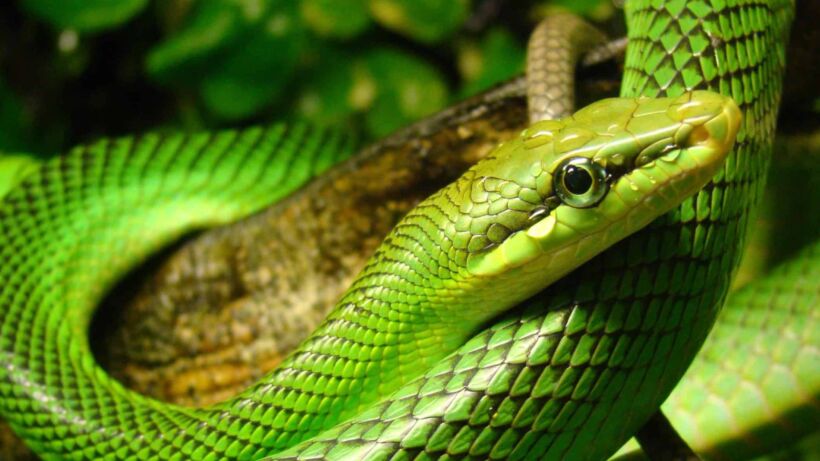
- Watch the gap. Most villas have a gap under the door or open vents. I remember waking up one night, hearing a scratching sound, and seeing a thin green snake (likely an Oriental Whip Snake) gliding across the ceiling beams. It was gone in seconds. It was non-venomous, but it was a stark reminder to look up sometimes, too.
Usually, if you leave them alone, they are just passing through. They don’t want to be in your house any more than you want them there.
What to Do If You See One
So, you’re walking down a path in Canggu or Ubud, and you see a snake slithering across the road. What do you do?
Don’t be a hero.
Seriously, don’t try to poke it with a stick or pick it up for a selfie. I’ve seen guys do this, and it’s idiotic. Most snake bites happen when people try to catch or kill the snake.
If the snake is moving, just freeze and let it pass. They can feel the vibration of your footsteps, so standing still calms the situation down. If it’s stationary, walk slowly backwards in a wide arc around it.
If you find one inside your hotel room or villa, don’t panic. Call the reception or your host. Most hotels in Bali have a “snake guy” on speed dial. There are professional handlers who can come and catch them safely to release them back into the wild.
The Medical Side of Things
I always carry travel insurance, and this is exactly why.
If you are bitten, stay as calm as possible (easier said than done, I know). Panic makes the heart pump faster, which spreads the venom faster. Don’t apply a tourniquet or try to suck out the venom—those are movie myths.
Get to a hospital immediately. The BIMC Hospital in Nusa Dua or Kuta is the standard for emergency care for tourists. They have anti-venom on hand. The cost for treatment without insurance can be astronomical, so make sure your policy covers medical evacuation and emergency treatment.
Don’t Let the Fear Ruin the Trip
I know, reading about cobras and vipers isn’t exactly relaxing. But please, don’t let this stop you from exploring Bali. The chances of actually seeing a dangerous snake are incredibly low. I’ve spent countless hours hiking, motorbiking, and swimming, and I’ve had exactly two close encounters.
Use common sense. Wear shoes in the rice fields. Look where you put your hands. Respect the jungle. If you do that, you’ll be fine. Bali is paradise, just remember that paradise has teeth.