Fulidhoo Island Guide: swim with sharks on a backpacker budget
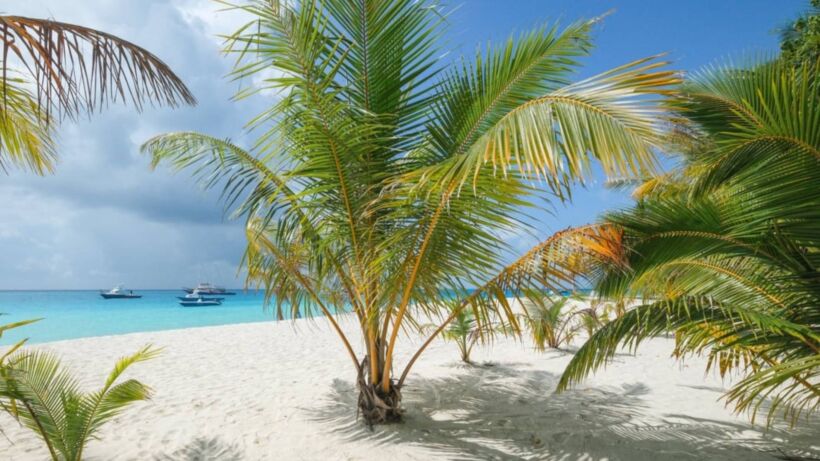
I’ll be honest: when I booked my trip to the Maldives, I wasn’t looking for a $1,000-a-night water villa with a butler. I wanted to see the fish, not just a fancy room. That’s how I ended up on Fulidhoo, a tiny speck of sand in the Vaavu Atoll that feels a million miles away from the glossy Instagram photos you usually see.
Escaping the Resort Bubble
Getting there was an adventure in itself. I landed in Malé feeling groggy from the long flight, immediately hit by the wall of tropical humidity—you know that feeling where the air just sticks to your skin? I had to navigate the chaotic harbor, dodging taxis and men hauling crates of cargo, to find the ticket counter for the public ferry. It’s not the glamorous speedboat experience the luxury hotels offer. The public ferry is slow, loud, and smells faintly of diesel and dried fish, but it only cost about $25. The ride took nearly four hours, rocking me to sleep as the deep blue of the Indian Ocean gradually shifted into that surreal, bright turquoise you see on postcards.
The Ferry Ride to Fulidhoo
When the boat finally pulled up to the jetty, my first thought was, “Is this it?” Fulidhoo is small. Like, really small. You can walk the entire perimeter in maybe fifteen minutes. There are no paved roads, just sand paths squeezed between lush green vegetation and brightly painted coral houses. It was quiet, save for the hum of generators and the occasional call to prayer drifting from the mosque. It felt authentic, raw, and completely unpretentious.
I stayed in a simple guesthouse, a far cry from the overwater bungalows. My room was basic, but the air conditioning worked overtime, which is all I really cared about. The owner, a friendly local guy named Ali, met me with a coconut and helped me haul my bag across the sand. He told me the island had a strict “no bikini” rule outside the designated tourist beach, which felt a little awkward at first, but I actually grew to appreciate the modesty. It forced me to be more respectful of the local culture rather than just barging in like I owned the place.
Life on a Local Island
The main reason I came here, though, was the sharks. I’ve always been terrified of the open ocean, but I also have this weird obsession with marine life. Ali organized a snorkeling trip for me on my second day. It wasn’t just me; a few other travelers from the guesthouse piled into a small wooden boat. We chugged out for about twenty minutes, the wind whipping my hair, until the engine cut and the captain pointed at the water.
“Jump,” he said.
I peered over the edge. The water was crystal clear, maybe twenty feet deep, and I could see dark shadows circling the bottom. My heart was hammering against my ribs. I took a deep breath, mask on, and rolled backward into the ocean.
Swimming with Sharks (And Surviving)
The second I hit the water, the noise of the boat engine vanished. All I could hear was my own rhythmic breathing through the snorkel. I looked down, and there they were. Nurse sharks. Not just one or two, but probably a dozen of them. They were massive, some easily six or seven feet long, with grey, sandpaper-like skin.
I won’t lie—panic flared up for a second. These are sharks, after all. But they were completely uninterested in me. They were lazy, lumbering bottom-feeders looking for a free meal. Our guide had brought a box of leftover fish scraps, which he started dropping into the water. The sharks went into a frenzy, swirling around him in a grey tornado.
I hovered above them, kicking my fins gently to stay in place. It was chaotic and beautiful. At one point, a shark swam right beneath my belly, close enough that I could have reached out and touched its tail (I didn’t, obviously). Seeing these powerful creatures up close, watching the way their muscles ripple under their skin, changed my whole perspective. They weren’t monsters; they were just part of the neighborhood.
After the shark feeding, we motored over to a nearby sandbank. If you’ve never been to a sandbank, imagine a patch of brilliant white sand in the middle of the ocean with absolutely nothing around it. The water was shallow and warm, like bathwater. I just stood there, waist-deep, feeling like I was walking on water. It was blindingly bright, so I had to squint, but the isolation was incredible. For an hour, it felt like we were the only people on earth.
The Reality Check in Fulidhoo
Later that afternoon, back on the island, I wandered over to the “Bikini Beach.” It’s a tiny roped-off section of the beach where tourists can swim in swimwear without offending the locals. It was small, but the sand was powder-soft and the water was calm. I sat on a plastic chair, drinking a lukewarm Coke from a convenience store, watching the sunset turn the sky into a gradient of purple and orange.
Now, a bit of honesty: Fulidhoo isn’t for everyone. If you need 24-hour room service, sparkling pools, and manicured gardens, you’re going to hate it. The mosquitoes can be vicious at dusk—I definitely regretted forgetting bug spray one evening and ended up with itchy ankles for days. And because it’s a local island, there’s no alcohol served anywhere. If you want a beer with dinner, you’re out of luck unless you buy a permit to bring your own, which is a hassle I skipped.
But if you want to skip the artificial luxury and actually see what the Maldives is really like—the noise of the ferry, the call to prayer, the sharks swimming at your feet—this is the place. I ended up staying three nights. I spent my days snorkeling, eating massive plates of tuna curry at the local cafés, and chatting with other travelers who were all just as broke and happy as I was.
Leaving was the hardest part. I stood on the jetty waiting for the ferry back to Malé, watching a group of local kids jumping off the pier, screaming with laughter. I realized I hadn’t taken many photos, mostly because I was too busy looking at everything with my own eyes. Fulidhoo doesn’t need a filter. It’s just sand, sea, and sharks, exactly as it should be.
Practical Tips for Your Visit
Before you pack your bags, just keep a few practical things in mind to make your life easier. Since Fulidhoo is a local island, you can’t just hop on a seaplane; you’ll likely need to catch the public ferry from Malé. It typically departs on Monday, Wednesday, and Friday mornings around 9:00 AM for about $25. It’s a bit of a trek, but it saves you a fortune compared to the speedboats. Once you’re there, you won’t spend much—I found guesthouses for around $60 a night and spicy tuna curries at the local cafes for under $10. Just remember that this is a Muslim community, so the island is dry. You won’t find a bar, so grab a bottle at duty-free in Malé if you want a drink in your room. Also, pack decent bug spray; the mosquitoes are relentless at dusk, and definitely bring modest clothes for walking through the village to show respect to the locals.